
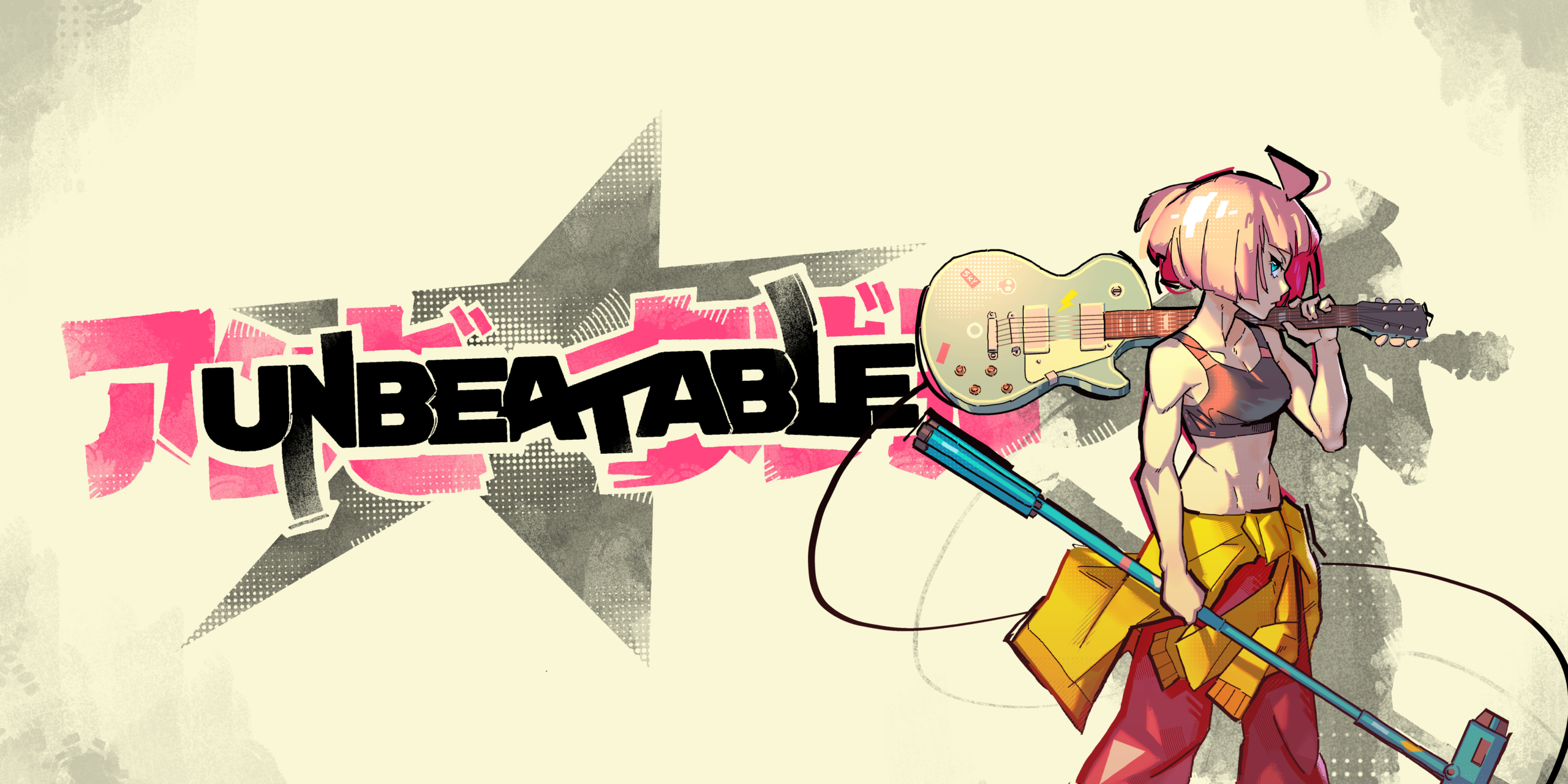
There’s a laundry list of things people will always fight for whether they realize it or not. Food, shelter, safety; The right to scream the lyrics to a song in your car like your life depends on it. Creative expression sits pretty high on that list, and the suppression of it is the driving force behind UNBEATABLE, the debut title from the folks over at D-Cell Games. It’s a rhythm based adventure game with a hand drawn anime inspired art style and enough passion behind it to practically burst through the screen. What starts as a stylish rhythm game slowly reveals itself to be something much more personal. Whether or not the whole is more than the sum of its parts is the real question.
From the main menu you’re given two modes: Story and Arcade. Arcade is simple, clean, and honestly the best showcase of what Unbeatable does well. It lets you replay songs from Story mode across multiple difficulty levels and really focus on the rhythm gameplay itself. But the context for all of those songs lives in Story mode, so let’s talk about that.
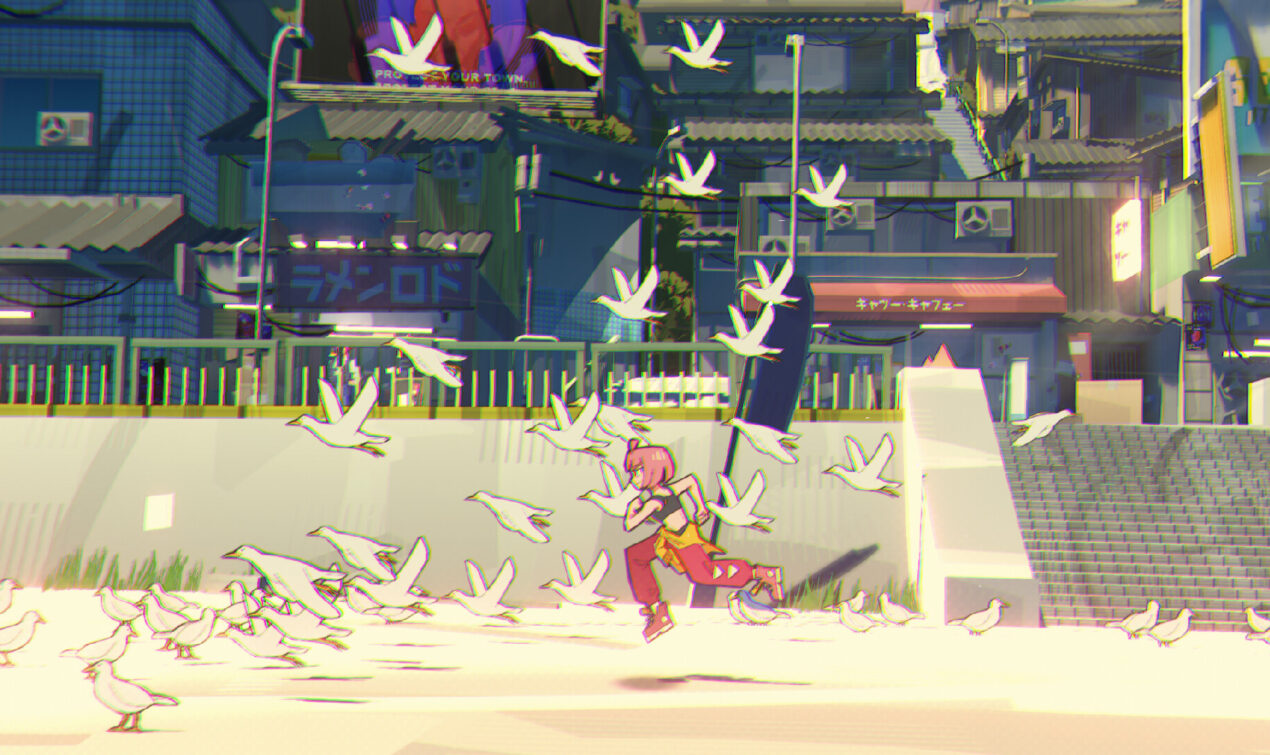
Once you pick a difficulty, the rhythm mechanics kick in immediately. You’re met with a beat and a prompt. Hit the button in time and the soundscape slowly builds itself up, breathing turning into finger snaps before the visuals finally reveal themselves. Unbeatable has a 2.5D presentation where hand drawn 2D characters move across environments that occasionally stretch into full three dimensional space. On paper, the character art and backgrounds should clash horribly. Somehow they don’t. The game finds this weird harmony inside the visual dissonance.
The real story begins when you take control of Beat, a pink haired musician who wakes up in a field alongside a twelve year old girl named Quaver. The two live in a world where music has been outlawed by a militant force called HARM. Together with outlaw musician twins Clef and Treble, they form a band and start pushing back against a system trying desperately to silence them. Each character has their own motivations for fighting, but the emotional core really comes from learning how these people slowly start trusting one another.
The story unfolds episodically across six chapters. There’s gameplay throughout, but make no mistake, the developers were clearly leaning much harder into the “story” side of Story mode. The experience is very linear with only minor opportunities to branch off and explore. That said, players willing to poke around will find hidden conversations and optional scenes that add a surprising amount of character and world building.
Your mileage with the story itself will probably vary. It’s obviously deeply personal to the writers, especially once the game starts diving into the backstories of Beat and Quaver later on. Unfortunately, there are moments where the dialogue overstays its welcome. One late game antagonist in particular circles the same points repeatedly before finally moving on. It gave me the same feeling I get watching Chasing Amy. Not bad writing by any means, just writing that could’ve used someone in the room willing to say, “Hey, maybe trim this scene down a little.”
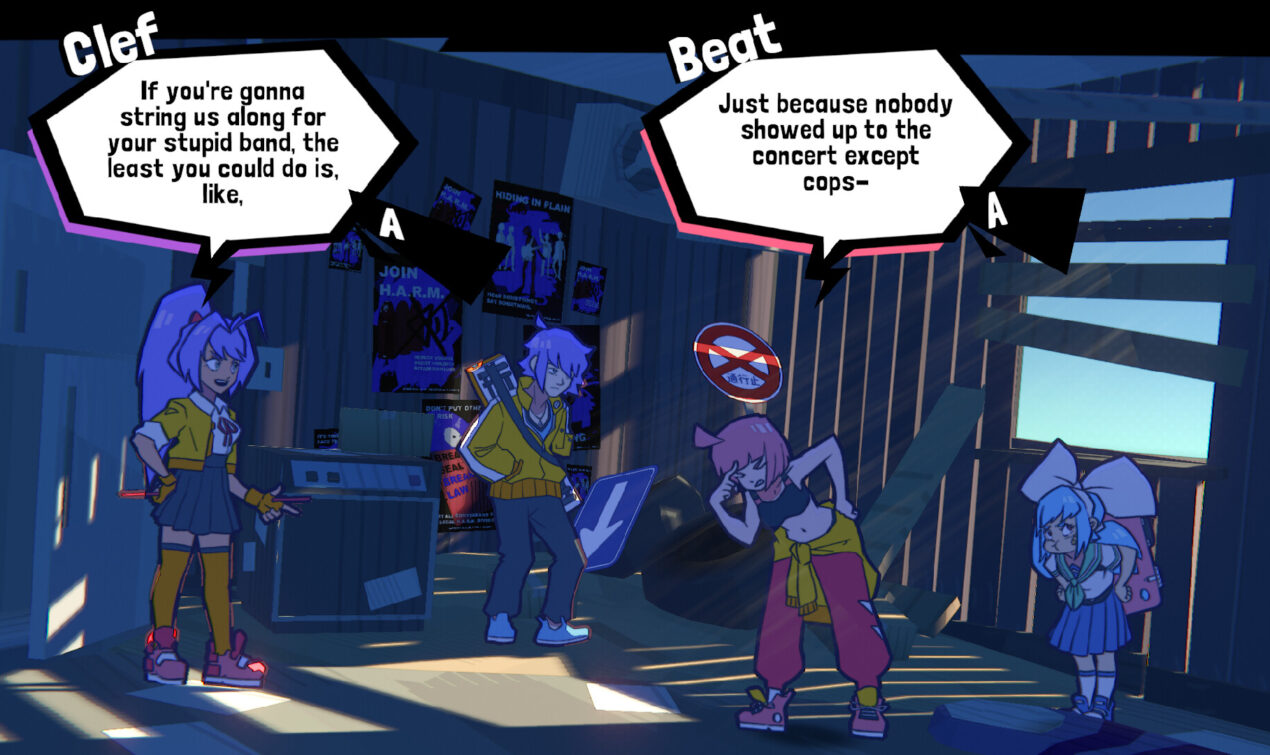
That wordiness also creates a couple gameplay issues. Dialogue choices are awkwardly presented one option at a time, forcing you to scroll through them with the triggers while manually advancing pages of text. More than once I accidentally picked the first option simply because I was trying to progress the conversation. Thankfully the choices don’t seem to dramatically alter the story, but it still feels clunky.
Even worse are the moments where songs begin immediately after lengthy cutscenes without much warning. You’ll be so deep into reading dialogue that the first few notes can fly right past you before your brain even realizes gameplay has started. Late game songs make this especially frustrating because failure can send you all the way back to checkpoints buried underneath long cinematic sequences you can’t skip.
As for the gameplay itself, most of your time outside battles is spent walking Beat around different environments and chatting with NPCs. The rhythm mechanics show up during combat encounters and the occasional mini game. Battles revolve around incoming attacks that appear either above or below Beat. If an attack comes from above, you hit R1. Below, L1. Simple enough at first.
Then the game starts getting mean.
Attacks begin coming from the foreground and background. Some notes require holds instead of taps. HARM agents and these creepy ghost-like enemies called The Silence start mixing attack patterns together mid song. On harder difficulties things can spiral into complete sensory overload in the best possible way.
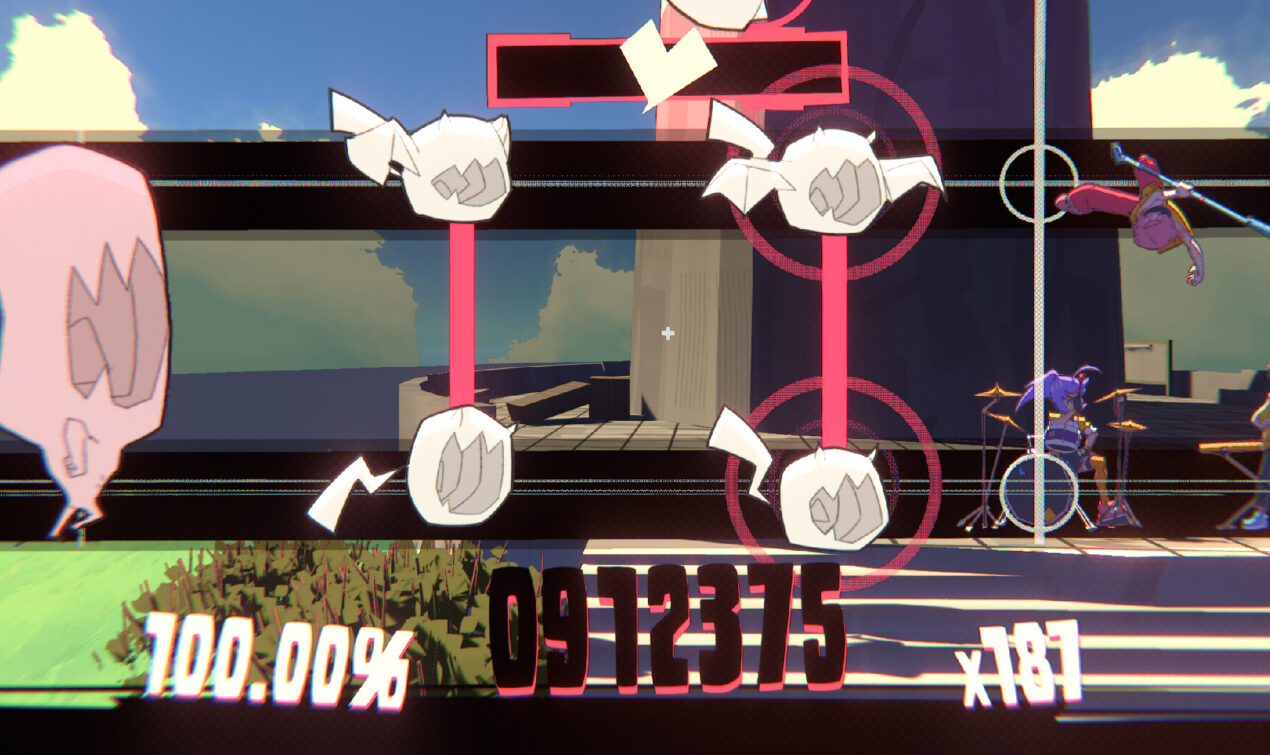
Not every song in Story mode is even designed to be beaten, which is honestly kind of fascinating. Some tracks feel intentionally overwhelming, flooding the screen with more notes than any normal person could reasonably process. Others are technically winnable, but the story continues even if you fail. It creates this weird tension where losing can still feel narratively appropriate.
Luckily, for a game where you’ll be spending a lot of time with music, the soundtrack absolutely rips.
The mini games are a mixed bag. The baseball game is a standout, using audio and visual cues in a way that feels intuitive and satisfying. Missing a hit never feels unfair, just motivating enough to immediately try again. The drink mixing mini game, on the other hand, is rough. The instructions are confusing, the interface feels awkward, and one section involving rhythmically shaking drinks borders on nonsense. Thankfully the game only forces you through it once before mercifully letting you move on with your dignity mostly intact.
For a first project, Unbeatable is incredibly impressive. Flawed, sure, but bursting with personality and confidence in a way a lot of bigger games simply aren’t anymore. The writing occasionally needs restraint, some systems could use streamlining, and the pacing drags here and there. But the foundation is rock solid.
More than anything else, though, the audio work deserves praise. From the songwriting and mixing by Clara Maddux and Vasily Nikolaev to the vocal performance from Rachel Lake as Beat, the music in Unbeatable is phenomenal across the board. Which is good, because if your rhythm game has bad music you may as well just pack it up and start selling insurance.
Unbeatable is a Buy It from me. It’s a Buy It if you already love rhythm games, and it’s a Buy It if you want to support a studio that clearly has something special brewing. More than anything, it feels like the start of something. And honestly, that’s exciting.
Unbeatable is available right now on Steam, PS5, and the Series series of Xbox.