

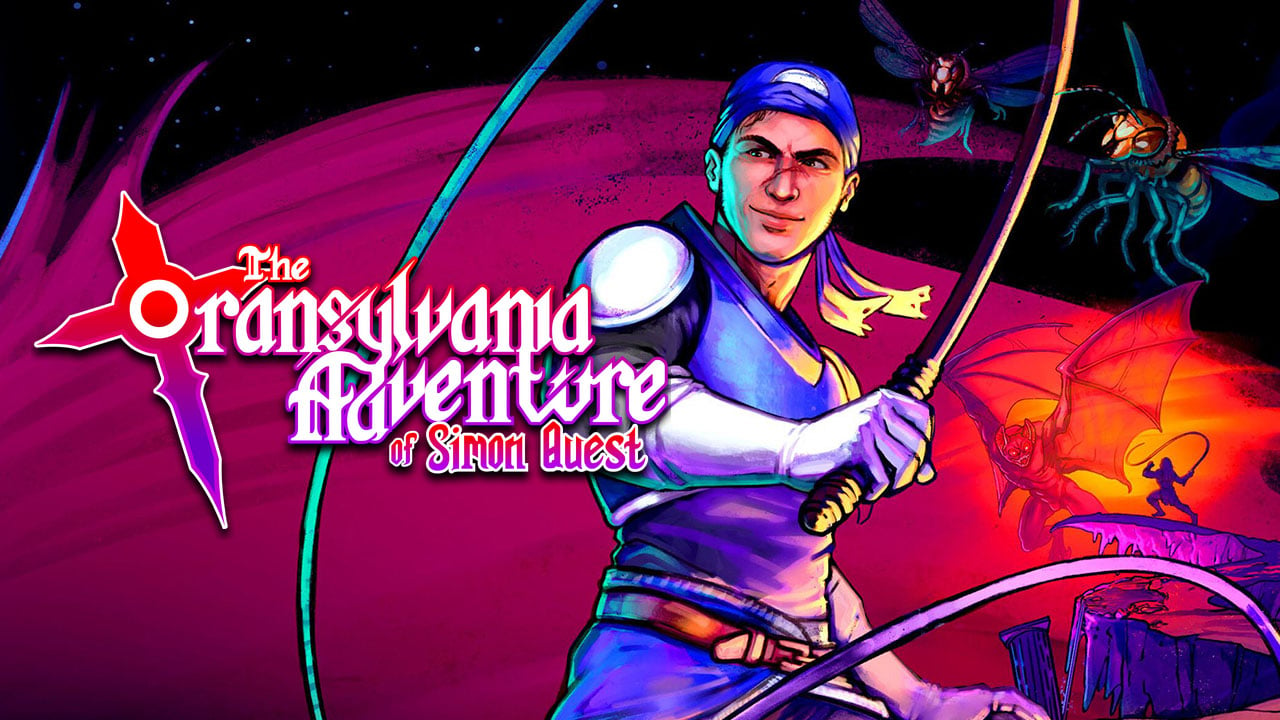
I need to start this preview with a confession: I am a staunch and unwavering supporter of Castlevania II: Simon’s Quest. I know it is the black sheep of the franchise. I know the the obtuse puzzles, the awkward localization, and the infamous day-and-night interruptions have all been roasted to death over the years. But I have incredibly fond memories of it. My brother and I were huge Castlevania fans growing up. Castlevania III: Dracula’s Curse was our entry point, and from there we went back to the original Castlevania, which was much more in line with that classic stage-based action format. Then came Simon’s Quest, this strange, ambitious departure that added towns, mansions, merchants, leveling, hidden items, and exploration. And for all its flaws, I would argue that without Castlevania II, the ‘vania’ half of the modern metroidvania would look very different. That is why The Transylvania Adventure of Simon Quest immediately clicked with me. It feels like a game made by someone who loves Simon’s Quest as much as I do, but also understands exactly where that game needed help.
In Castlevania II, Simon Belmont had to collect Dracula’s body parts: his rib, heart, eyeball, nail, and ring, burn them, summon Dracula’s specter, and defeat him to free himself from the curse. Here, Simon Quest arrives in Transylvania ready to kill Dracula, only to discover that another vampire hunter already beat him to it. So naturally, instead of accepting that, he decides to gather Dracula’s remains, resurrect him, and kill him again just so he can claim the bragging rights. It is an incredibly stupid motivation in the best possible way, and it gives the whole game a great comedic edge without ever feeling dismissive of the source material.
The demo gives you a surprisingly full slice of what the final game seems to be offering. You explore dangerous woods, whip enemies, collect hearts, gather gold, earn experience, visit towns, talk to villagers, buy items, pray at churches to heal and save, and eventually enter a mansion to claim one of Dracula’s remains. The moment-to-moment gameplay feels extremely faithful to Simon’s Quest: Simon walks, jumps, whips, and battles familiar monsters like skeletons, bats, ghosts, mermen, etc. But the quality-of-life improvements are immediate. You still collect classic sub-weapons like the dagger, axe, holy water, boomerang, and even a shovel, and like Simon’s Quest, these become permanent parts of your inventory. But the improvement is you can swap between them instantly with the bumpers instead of pausing the game and digging through menus every time you want to change your equipped item. That alone is a huge improvement.
The sub-weapons themselves also show how thoughtfully this game builds on the old formula. The dagger gives you that quick, straight-line ranged attack. The holy water starts as a sort of explosive bottle that creates a burst of fire and damages anything that walks into it, but through a hidden side quest, you can upgrade it into something closer to the later Castlevania holy water, where the flame travels along the ground and catches multiple enemies. The boomerang works like the classic cross, where you can throw it and catch it on the return, but with one funny wrinkle: if your back is turned when it comes back, it smacks you and deals damage. Annoying? A little. Charming? Absolutely. Then there is the shovel, which initially seems like a simple tool for digging up buried items. But if you uncover its secret upgrade, Simon can scoop up burning rocks and fling them at enemies, even charging the shot to send it farther. It is a great example of the demo rewarding players who poke around instead of just rushing forward.
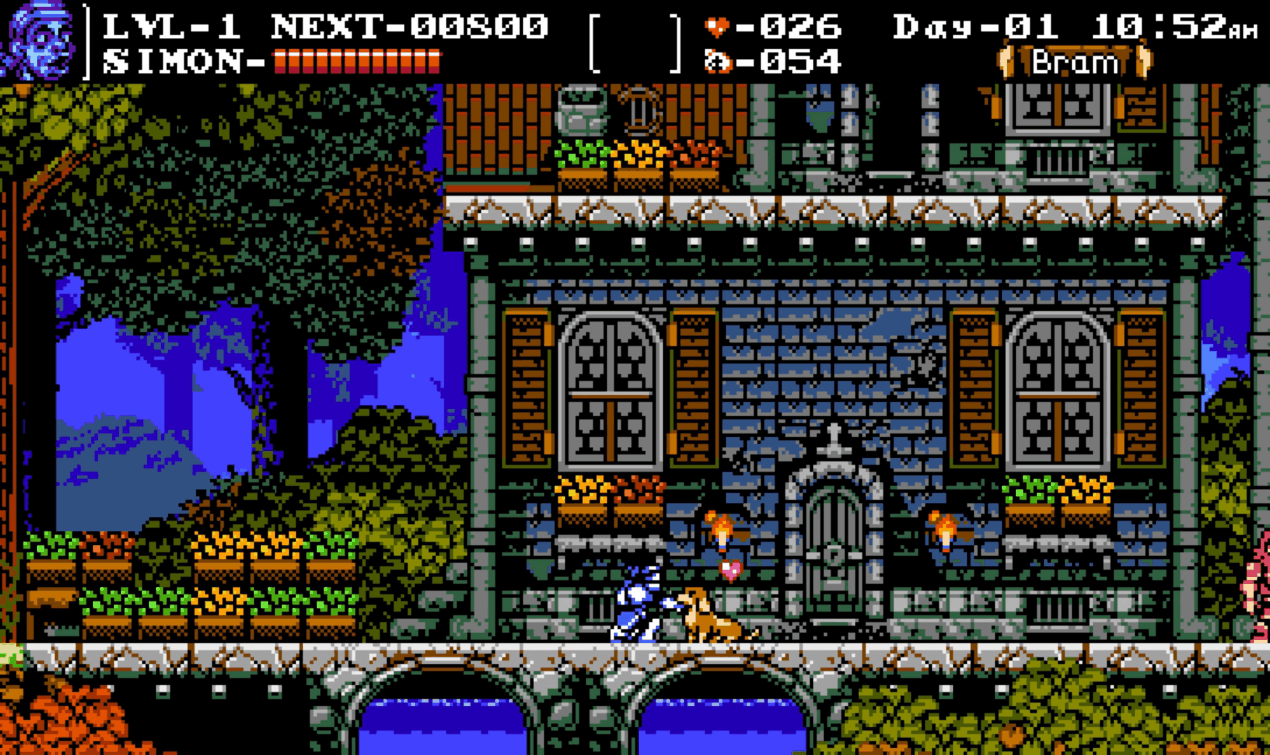
That sense of discovery is really where the demo shines. Simon can use his whip to grapple, swing, and launch himself across gaps, which adds a layer of movement that feels inspired by later Castlevania ideas while still fitting this NES-style world. I found one of the demo’s secrets just by messing around in town, swinging onto the roof of a building, and discovering an entrance hidden above the church. That led me to an attic where I could upgrade one of my items. Nothing screamed, “Go here.” The game simply gave me the tools, let me experiment, and rewarded my curiosity. The mansion works the same way. You fight a knight boss, claim one of Dracula’s body parts, and the game even keeps the legendary “you now prossess” typo from the original NES localization as a cheeky nod to Simon’s Quest fans. But then, just when I thought the demo was ending, I found an optional route leading to a much tougher giant crab boss. That told me everything I needed to know: this game is going to be loaded with secrets.
It also modernizes Castlevania II in the exact ways I would want. The day-and-night cycle returns, but instead of freezing the game with a text box every time the sun goes down or comes back up, it happens naturally in real time. Around evening, the sky darkens, townsfolk retreat indoors, monsters invade the village, and enemies become more dangerous. By morning, the town slowly returns to normal. The idea is preserved, but the interruption is gone. Enemies can also drop health-restoring food, meaning the classic wall chicken has basically escaped the wall and entered the general Transylvanian food supply. You can still return to churches to heal and save, but you are not constantly forced to retreat just because you took a few hits. There is also an overworld map that gives you a better sense of where the town, mansion, and surrounding areas are without turning the game into a full room-by-room metroidvania map. It keeps the mystery, but removes a lot of the needless confusion.
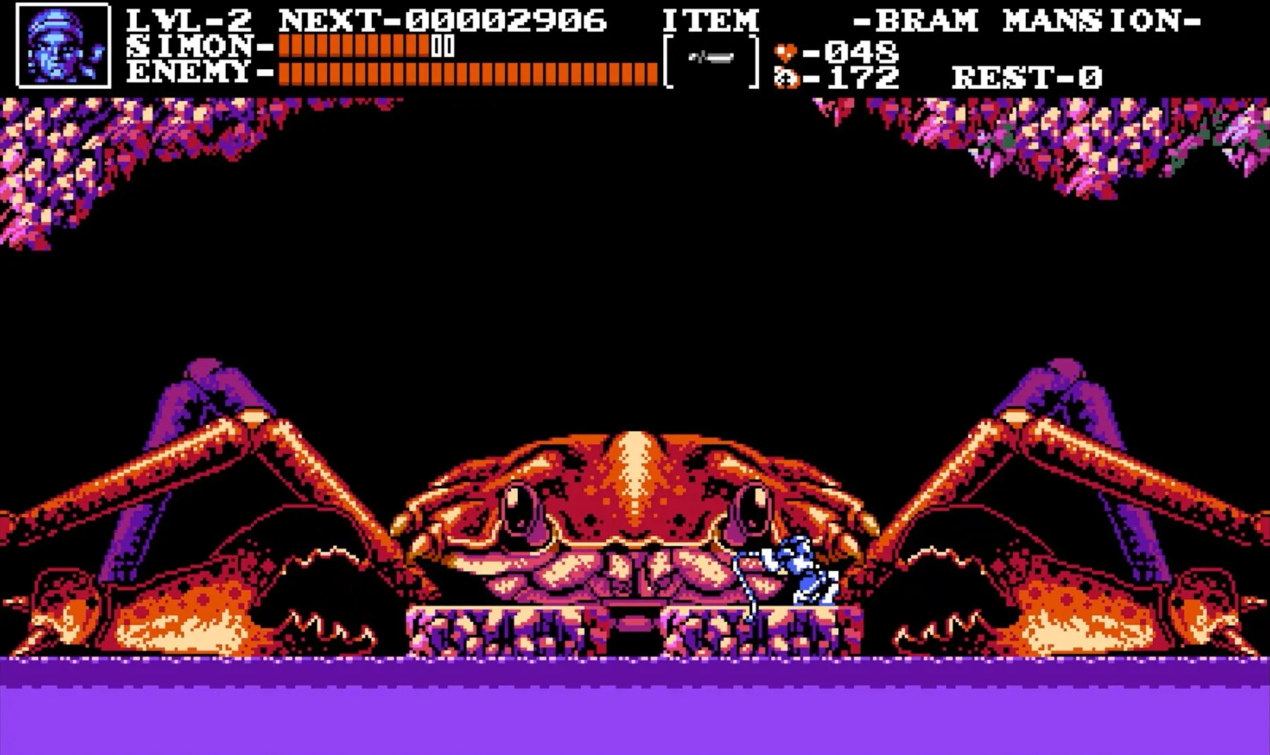
And visually, the game is gorgeous. Programancer already showed serious pixel-art chops with Prison City, but The Transylvania Adventure of Simon Quest feels like a huge step forward. The sprites, backgrounds, enemies, and bosses all evoke the NES era without being completely shackled to NES limitations. It has the look of an 8-bit Castlevania game as you remember it in your head: richer colors, more expressive animation, more detail, and a broader palette than the real hardware could have handled back then. The giant crab boss especially made me stop and appreciate just how much personality can be squeezed into this style. I will always be a staunch supporter of pixel art, and this demo is another reminder that pixel art is not a limitation or a shortcut. Done well, it is a full-on art form.
From the demo alone, I am completely sold. The Transylvania Adventure of Simon Quest does not feel like a cheap parody or a surface-level tribute. It understands Castlevania II deeply: the ambition, the weirdness, the flaws, the charm, the sense of mystery, and the strange joy of wondering whether every wall, rooftop, grave, or dead end might be hiding something. It keeps the towns, mansions, body parts, sub-weapons, churches, secrets, monsters, and day-night cycle, but smooths away the frustration with smarter design and modern quality-of-life touches. For some people, this may look like a game trying to fix everything wrong with Simon’s Quest. For me, it feels like a celebration of everything Simon’s Quest got right. What a wonderful night to have a new adventure.
Wishlist on The Transylvania Adventure of Simon Quest Steam: https://store.steampowered.com/app/2749920/The_Transylvania_Adventure_of_Simon_Quest/